Pacific Warming Speed-Up: Niño 3.4 Crosses One Degree Celsius

Representational Image: AI-Skymet
Key Takeaways:
- El Niño conditions are strengthening rapidly, with all Niño indices remaining above threshold levels.
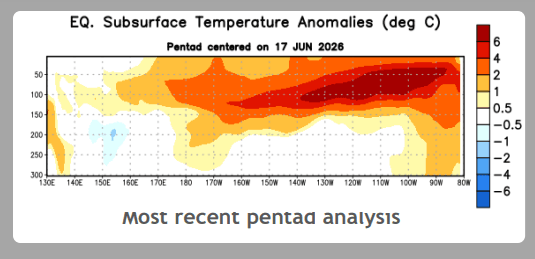
- Subsurface Pacific Ocean warming above 6°C is likely to accelerate El Niño intensification in July 2026.
- The Indian Ocean Dipole remains neutral but may turn positive during the latter half of the monsoon season.
- Fresh monsoon systems over the Bay of Bengal may revive rainfall activity across central and northern India.
El Niño conditions are strengthening across the tropical Pacific Ocean, with SST anomalies in the Niño 3.4 region showing a steady upward trend. All the Niño indices in the tropical Pacific Ocean collectively suggest that Pacific Ocean conditions have transitioned into El Niño conditions. Both oceanic and atmospheric indicators are becoming increasingly aligned, supporting further intensification of the ongoing El Niño event.
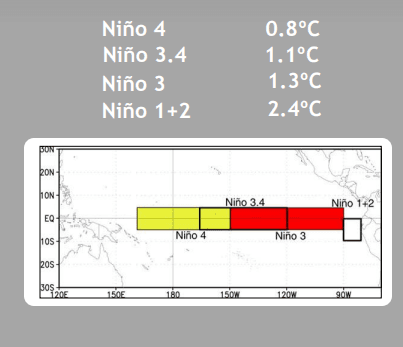
Weak El Niño conditions are expected to rapidly transform into moderately strong El Niño conditions during early July 2026.
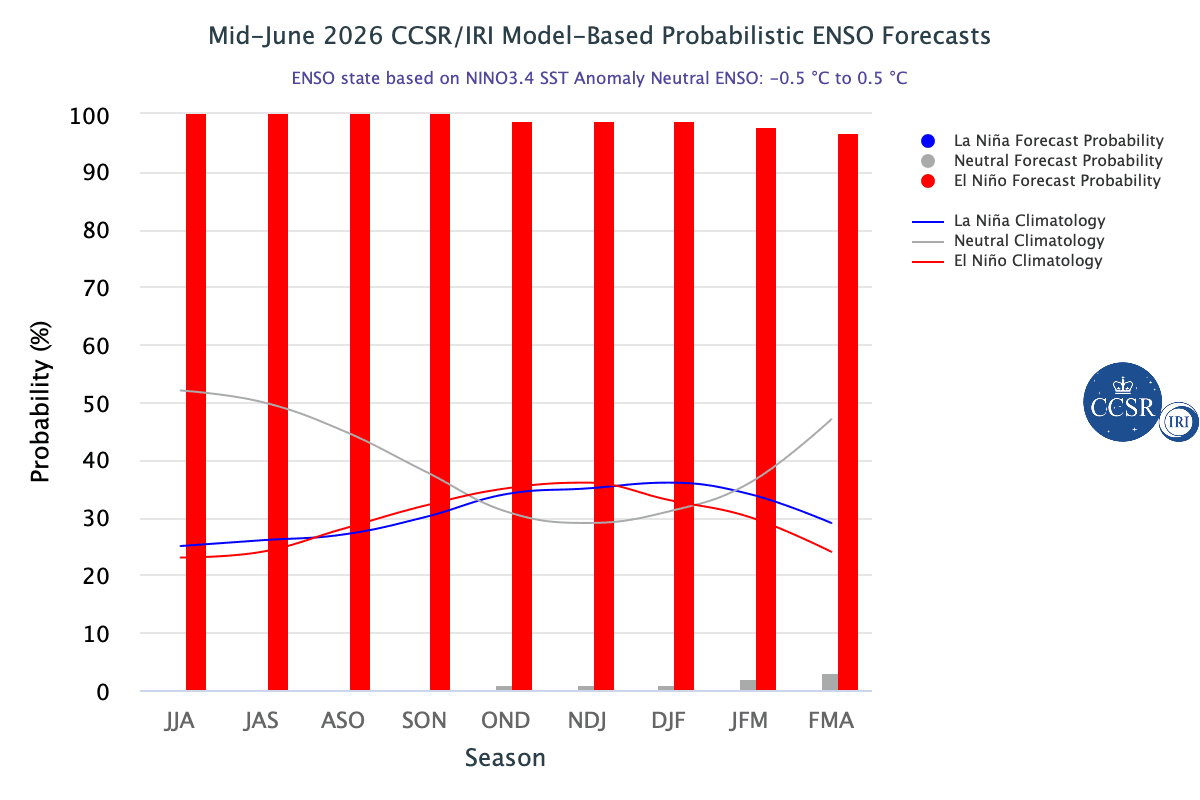
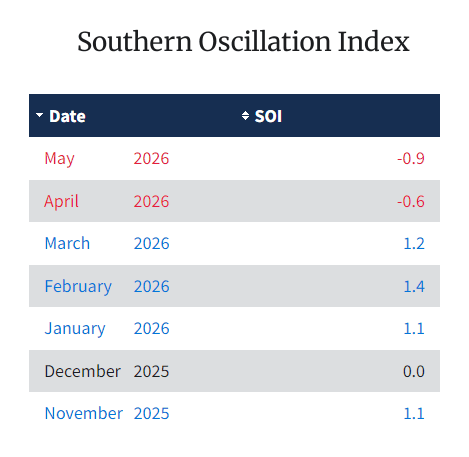
ENSO: Persistently negative Southern Oscillation Index (SOI) values reflect further weakening of the Walker Circulation, which is synonymous with the consistent development and intensification of El Niño. Additionally, there is substantial subsurface warming, with temperature anomalies exceeding 6°C in the central-eastern equatorial Pacific Ocean. This subsurface ocean heat content is expected to accelerate the strengthening of El Niño conditions. Moderately strong El Niño conditions are quite likely during the first half of July 2026 itself.
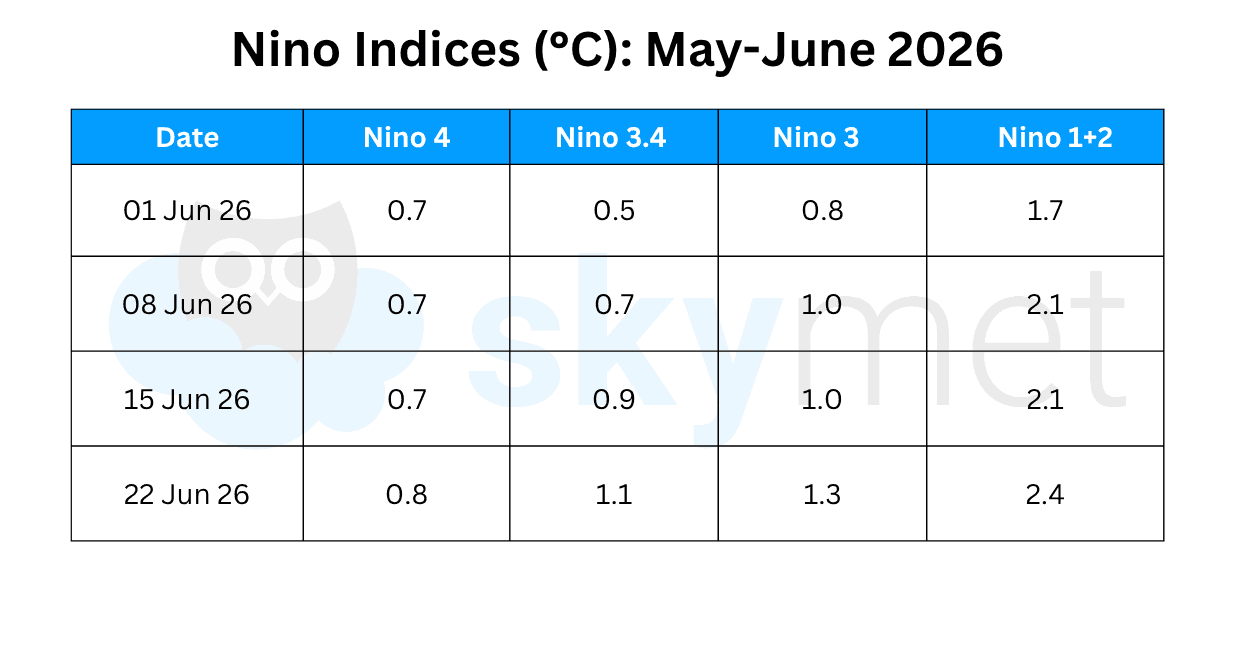
All the Niño indices in the tropical Pacific Ocean are currently above the threshold mark of 0.5°C. The degree of warming is increasing from the central to the eastern Pacific Ocean. Niño 3.4 has crossed a temperature anomaly of 1°C for the first time since April 2024. Niño 1+2 is warming rapidly, with anomalies remaining above 2°C for the last three weeks. Moderate-intensity El Niño conditions may therefore emerge earlier than previously anticipated.
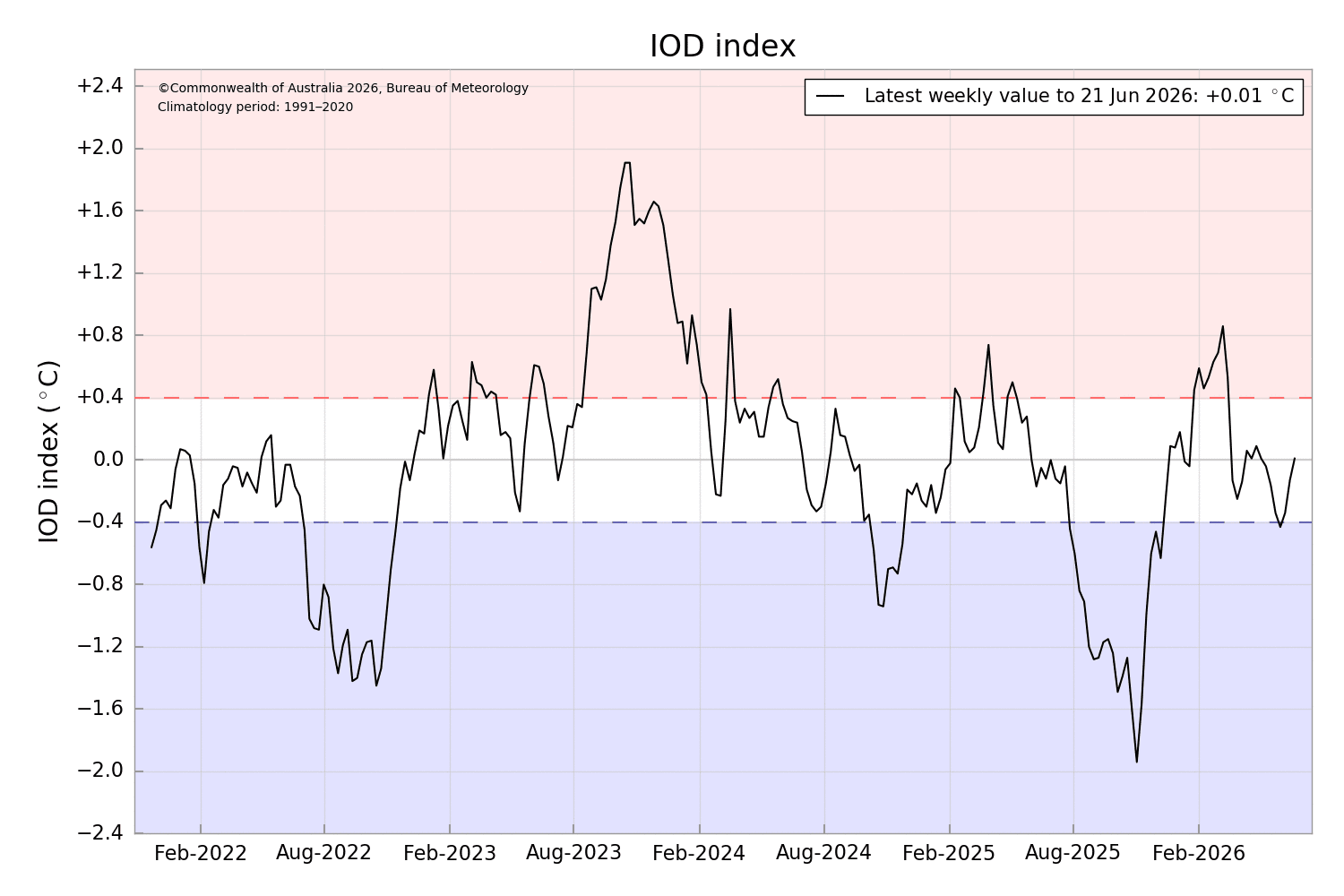
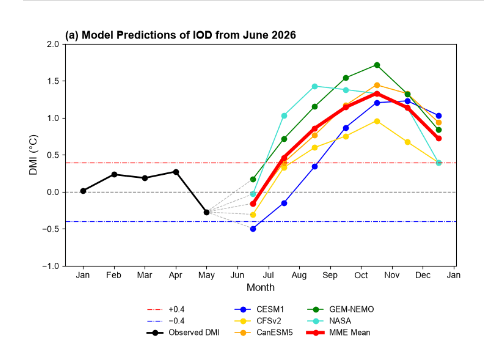
IOD: The Indian Ocean Dipole (IOD) has shifted from a negative neutral phase of -0.4°C to nearly neutral conditions. The latest Dipole Mode Index (DMI) value for the week ending June 21, 2026 stood at +0.01°C. The IOD is considered inactive when the DMI lies between -0.4°C and +0.4°C.
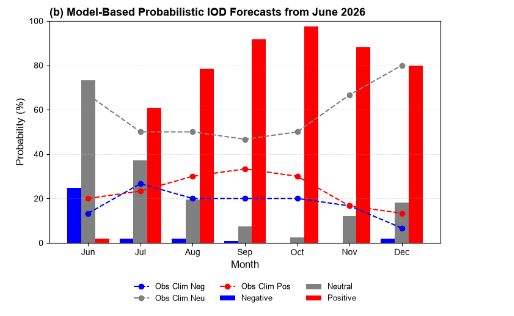
Forecasts indicate that the IOD will remain in a positive-neutral phase through July 2026 and may cross the +0.4°C threshold during the second half of Southwest Monsoon 2026, potentially evolving into a positive IOD event.
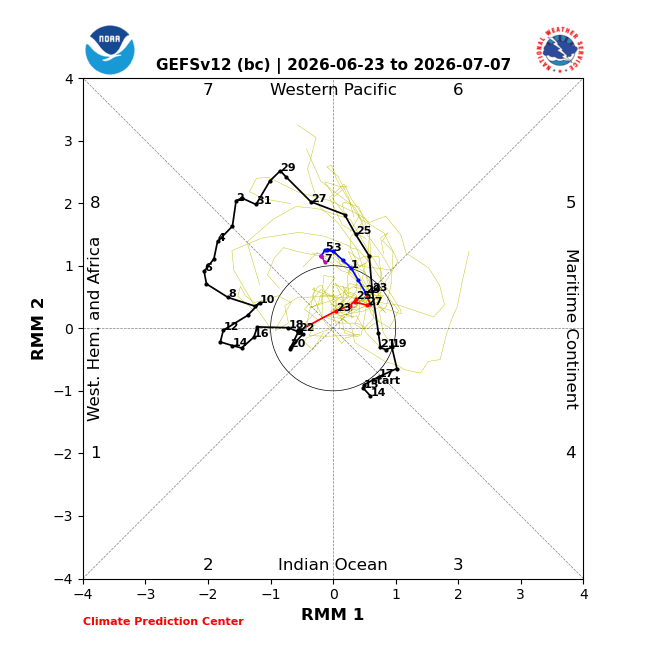
MJO: The Madden-Julian Oscillation (MJO) remained disorganized and nearly stationary over the Western Hemisphere through the middle of June. The weakening of the MJO was caused by destructive interference from strengthening El Niño conditions. The MJO signal is expected to remain weak over the Indian Ocean during the last days of June. However, there is growing model support for a reorganizing MJO over the Maritime Continent and Western Hemisphere towards the beginning of July.
In the absence of favourable MJO and IOD conditions, tropical cyclone genesis potential remained subdued over the Indian Seas during June 2026. However, monsoon systems are now likely to develop over the Bay of Bengal, which may help revive the dormant monsoon and push rainfall activity deeper into central and northern parts of the country.