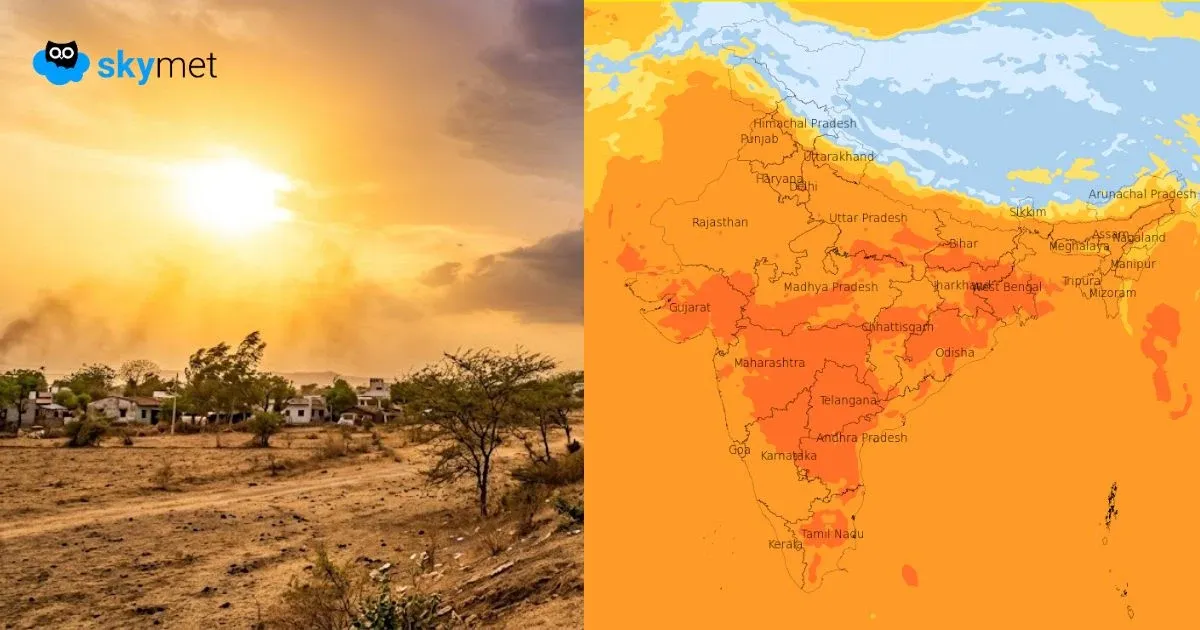
Monsoon 2026 June Forecast India: Near-Normal Onset Likely; Western Ghats & Indo-Gangetic Plains to See Active Spells

Key Takeaways:
- June 2026 monsoon onset likely near normal at 101% of LPA
- 70% probability of normal rainfall, ensuring a stable start
- Western Ghats & Indo-Gangetic plains to see active rainfall spells
- Central & East India may experience patchy and below-normal rainfall
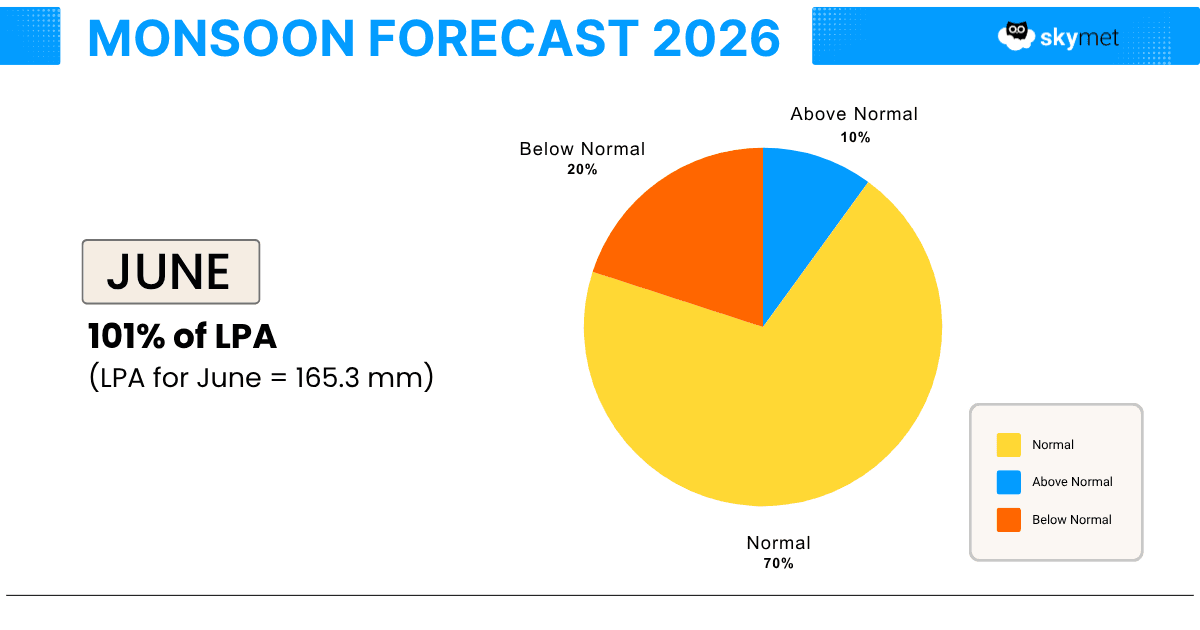
The Southwest Monsoon 2026 is expected to begin on a near-normal note in June, with rainfall projected at 101% of the Long Period Average (LPA).
In simple terms, the monsoon onset is likely to be stable but regionally uneven, with active rainfall over parts of the Western Ghats and Indo-Gangetic plains, while some central and eastern regions may see subdued activity.
What Do the Probabilities Say? (June Outlook Explained Simply)
The rainfall outlook for June reflects a strong bias toward normal conditions:
- 70% probability of Normal rainfall
- 20% probability of Below Normal rainfall
- 10% probability of Above Normal rainfall
This indicates that most parts of the country are likely to experience near-seasonal rainfall, with only a limited risk of deficit or excess conditions.
The monsoon progression during June is expected to be steady rather than aggressive, with gradual advancement from southern and central regions toward the northern plains. While widespread extremes are unlikely, regional variability may still persist, especially during the early phase of onset.
Where Will It Rain More or Less? (State-wise & Regional Outlook)
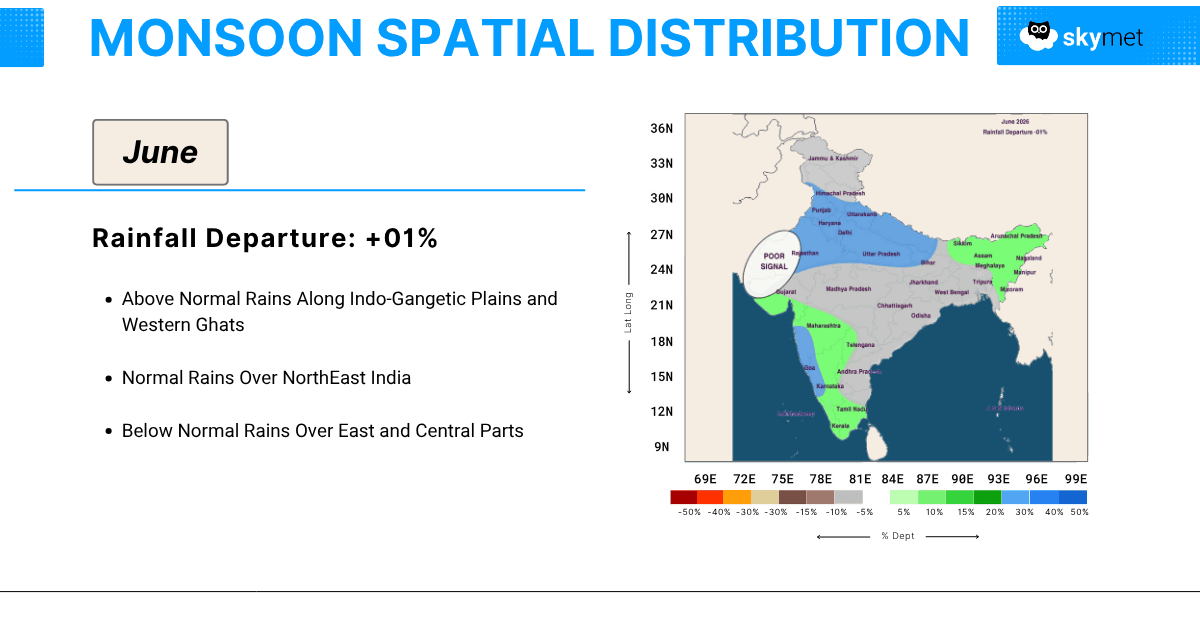
The spatial distribution for June indicates a slight positive rainfall departure of around +1%, reinforcing a near-normal start to the monsoon season.
- Above-normal rainfall zones: Parts of the Western Ghats (Konkan, Goa, Coastal Karnataka, Kerala) and stretches of the Indo-Gangetic plains are likely to witness enhanced rainfall activity, supported by strong monsoon currents and moisture inflow.
- Normal rainfall regions: Northeast India is expected to receive largely normal rainfall, maintaining seasonal balance during the early phase.
- Below-normal regions (key concern): Parts of Central and East India, including Madhya Pradesh, Chhattisgarh, and adjoining areas, may experience below-normal rainfall, indicating patchy and uneven distribution.
- Northwest India: Some pockets may remain under a slower monsoon progression zone, with variability in rainfall during the initial phase.
Overall, the pattern reflects a typical early monsoon structure, where coastal and northern belt activity picks up first, while central regions may lag initially.
What Does This Mean for India?
The June outlook suggests a stable start to the monsoon season, particularly benefiting coastal and northern agricultural regions with timely rainfall. However, central and eastern parts may face early-season gaps, which could impact initial sowing in rainfed zones.
Water availability is expected to remain adequate but not significantly surplus, with meaningful improvements dependent on rainfall performance in July and August.
Major Weather Events: June 2025
A month of stark climate contrasts, June 2025 saw extreme heatwaves in North and West India alongside floods, landslides, and intense monsoon activity across other regions.
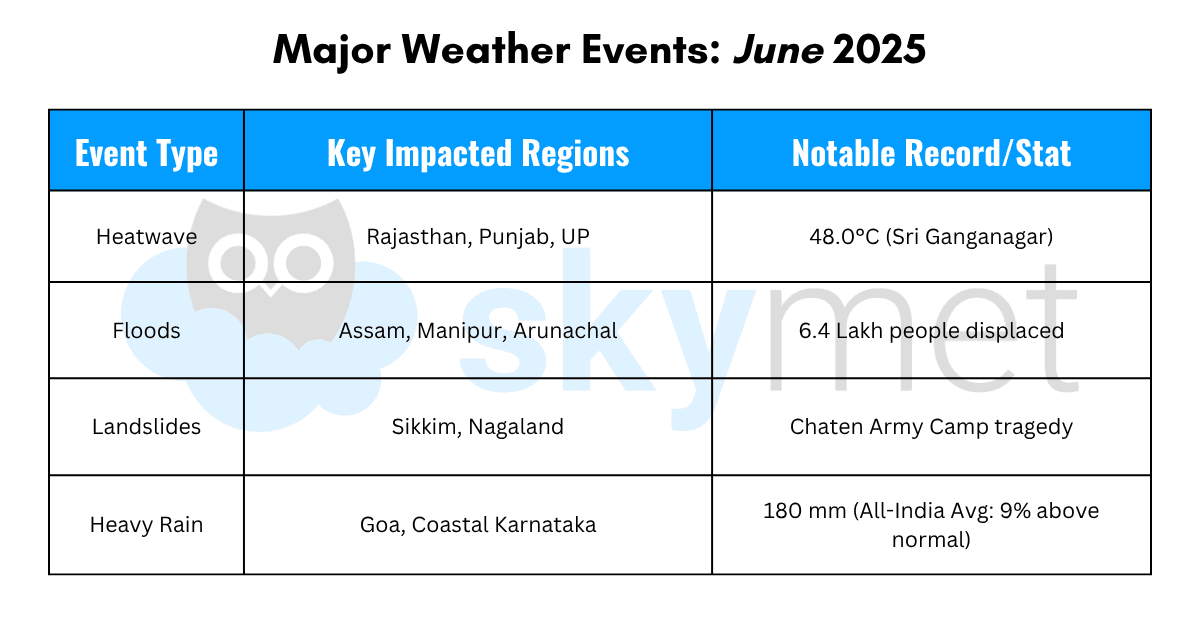
- Severe Heatwaves (North & West India): The India–Pakistan heatwave peaked mid-June, with Sri Ganganagar, Rajasthan recording 48.0°C on June 12, 2025; over 455 deaths were reported across April–July, with Rajasthan, Punjab, Haryana, Uttar Pradesh, and Odisha facing prolonged heatwave to severe heatwave conditions.
- Floods and Cloudbursts (Northeast India): Assam saw over 640,000 people affected and at least 44 deaths due to floods and mudslides; Sikkim witnessed deadly landslides at an army camp in Chaten (Lachen District) on June 1; Arunachal Pradesh faced a cloudburst in Itanagar causing flash floods, infrastructure damage, and displacement.
- Monsoon Onset & Heavy Rainfall (South & West India): An early and intense monsoon led to urban flooding in Mumbai; Gujarat and Kerala recorded the highest number of heavy rainfall days (50mm+), with Gujarat receiving over 60% above normal rainfall; Goa recorded the highest monthly rainfall at 759.5 mm.
- Lightning and Thunderstorms: Lightning and thunderstorms remained the deadliest hazard, occurring on 104 out of 122 monsoon days (June–September), with high casualties reported in Andhra Pradesh, Bihar, and Jharkhand during June.
Final Takeaway
June 2026 is expected to deliver a near-normal and stable onset, with stronger activity over the Western Ghats and northern plains, while central and eastern regions may see uneven rainfall, setting the tone for a gradual monsoon progression.
Skymet Exclusives: